Kerala ritual art forms are vibrant cultural expressions deeply rooted in worship, mythology, and community life, featuring iconic performances such as Theyyam (the divine dance of North Kerala), Padayani (ritual theatre with striking masks), Mudiyettu (the dramatic enactment of Goddess Kali’s legend), and unique traditions like Kalamezhuthu (ritual floor drawings using natural powders) and Tholpavakkoothu (temple-based shadow puppetry), all distinguished by elaborate costumes, rhythmic music, expressive movements, and symbolic storytelling that invoke deities and preserve ancient folklore.
Major Ritual Art Forms of Kerala
Theyyam
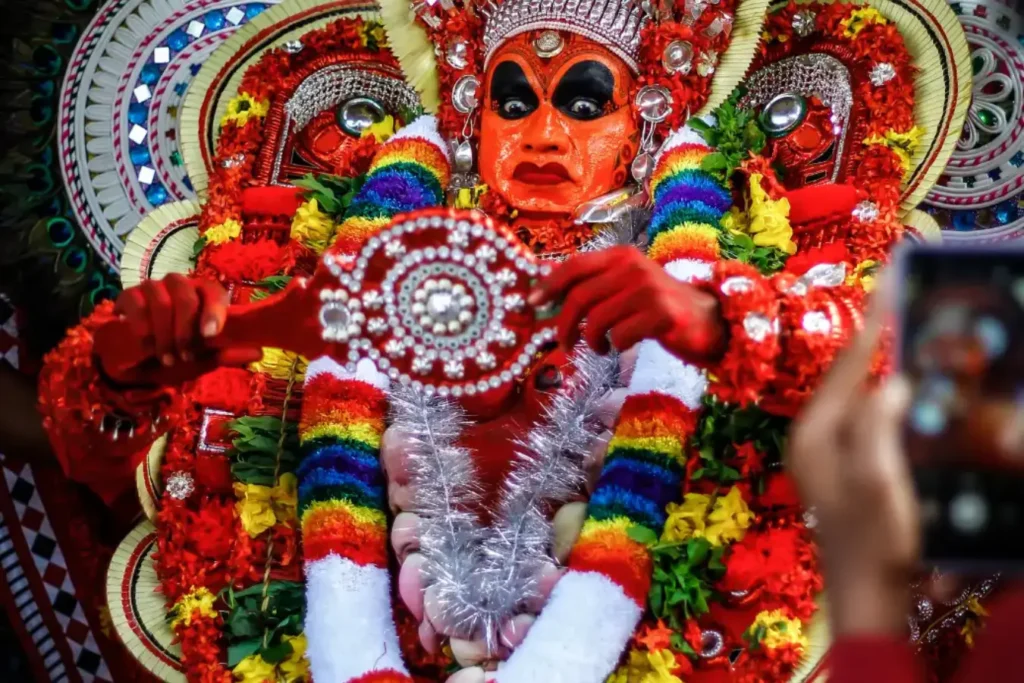
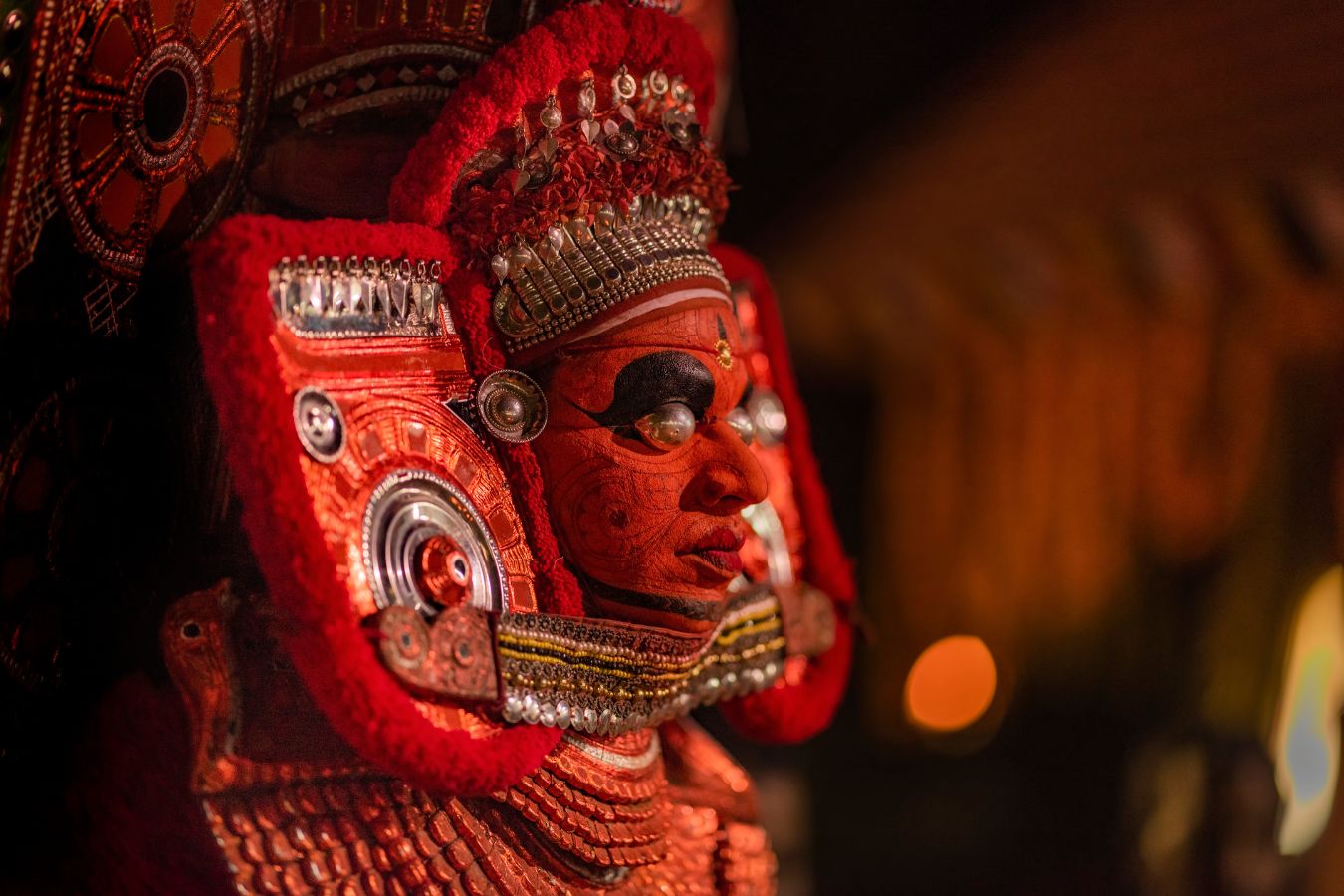
Theyyam is a powerful ritual art form of North Kerala, especially practised in Kannur and Kasaragod, where the performer is believed to become a living embodiment of a deity. Marked by striking face painting, elaborate costumes, and towering headgear made from natural materials, Theyyam is performed in temple courtyards and sacred groves as an act of worship rather than entertainment. Accompanied by intense percussion, fire rituals, and rhythmic movements, each performance narrates ancient myths, local legends, and ancestral stories, allowing devotees to seek blessings directly from the performer and experience a deep connection between faith, art, and community.
Types of Theyyam
- Muchilottu Bhagavathi Theyyam
- Kathivanoor Veeran Theyyam
- Gulikan Theyyam
- Vishnumoorthi Theyyam
- Raktha Chamundi Theyyam
- Kuttichathan Theyyam
- Pottan Theyyam
- Muthappan Theyyam
- Kandakarnan Theyyam
- Pulimaranja Thondachan Theyyam
For travelers seeking an extraordinary cultural experience,Travelbug India offers exclusive Theyyam tours during the peak season from November to April in North Kerala. This immersive journey allows visitors to witness the electrifying Theyyam performances up close in temple courtyards and sacred groves, experience the vibrant rituals, elaborate costumes, rhythmic percussion, and divine storytelling that bring legends to life. Perfect for culture enthusiasts and photography lovers alike, a Theyyam tour with Travelbug India provides not only a glimpse into Kerala’s living heritage but also a chance to connect with the spiritual heart of the region.
Padayani
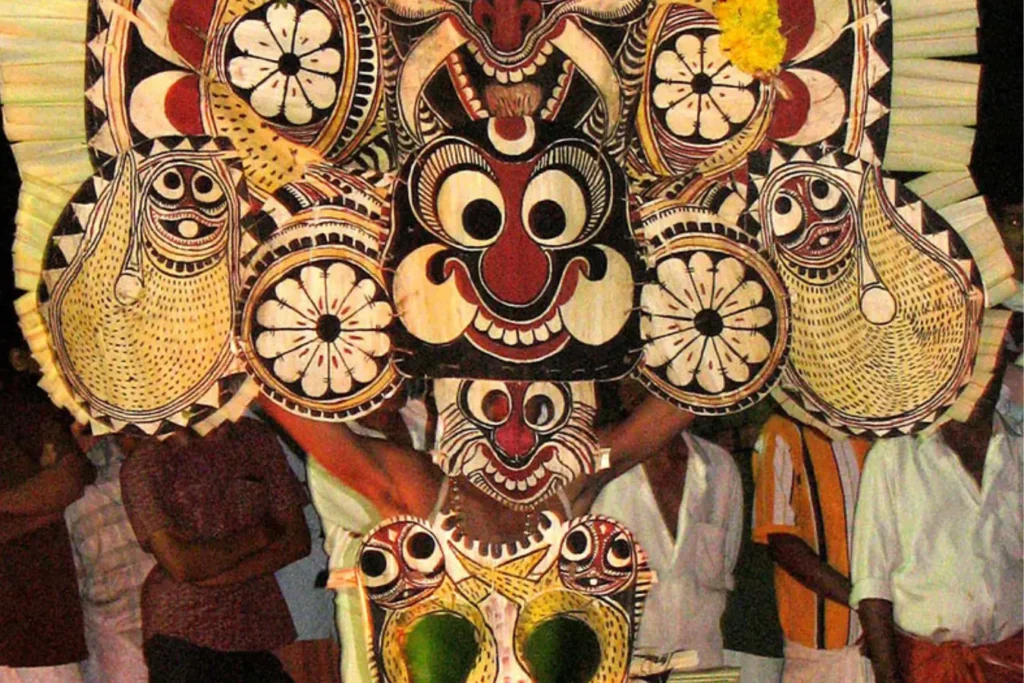
Padayani is a vibrant ritual art form of Kerala, practised mainly in the central regions, where it is performed as part of temple festivals dedicated to goddess Kali. The art form is known for its large, colourful masks made from areca palm leaves, natural pigments, and bamboo, which represent powerful divine and mythological characters. Accompanied by rhythmic percussion, chants, and energetic movements, Padayani performances narrate stories from folklore and mythology. Deeply rooted in community participation, Padayani is both a sacred ritual and a cultural expression that reflects Kerala’s devotion, craftsmanship, and living traditions.
Mudiyettu
Mudiyettu is a traditional ritual theatre of Kerala that depicts the mythological battle between goddess Kali and the demon Darika. Performed mainly in temple courtyards of central Kerala, Mudiyettu is a sacred ritual rather than a stage performance. It combines dramatic storytelling, ritualistic movements, live percussion, and symbolic costumes, especially the distinctive headgear worn by the performers. Recognised by UNESCO as an Intangible Cultural Heritage, Mudiyettu plays an important role in preserving Kerala’s ancient myths, religious practices, and community-based artistic traditions.
Koodiyattam
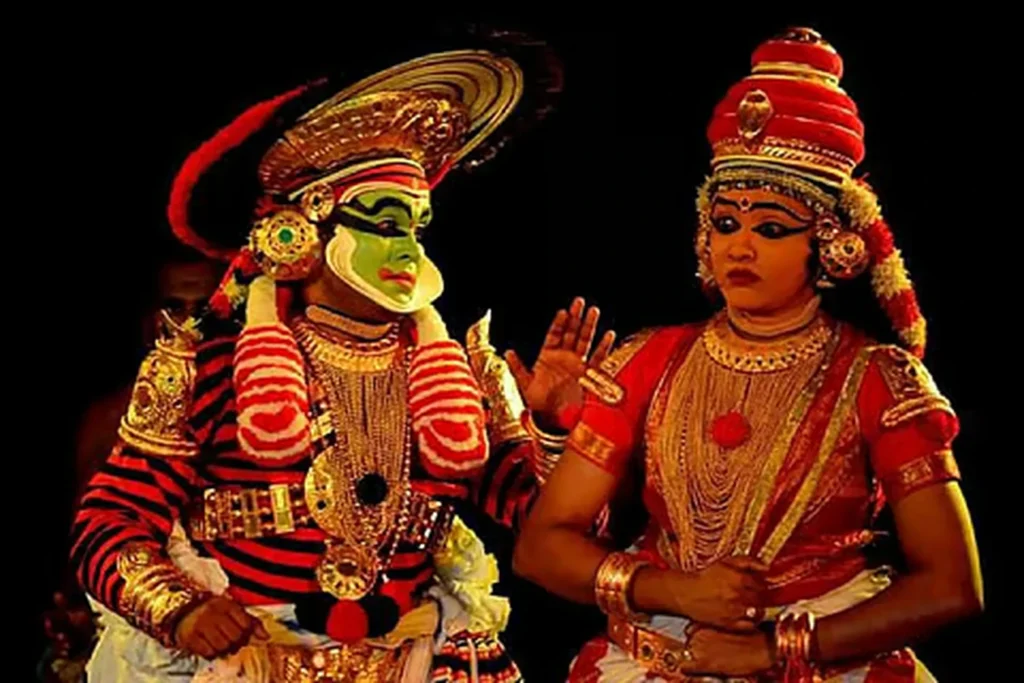
Koodiyattam is one of the oldest surviving theatre traditions in the world, performed in Sanskrit within temple theatres of Kerala. Known for its highly detailed acting style, expressive eye movements, hand gestures, and ritualised performance techniques, Koodiyattam presents episodes from ancient epics and classical texts as a sacred offering.
Kalamezhuthu
Kalamezhuthu is a unique ritual art form that involves creating large, intricate floor drawings of deities using natural coloured powders. Practised in temples and sacred spaces, these drawings are made as part of worship rituals and ceremonially erased at the end, symbolising devotion and impermanence.
Tholppavakkoothu
Tholppavakkoothu is a traditional shadow puppetry art performed in temple complexes, especially in Kerala’s Palakkad region. Using finely crafted leather puppets and illuminated screens, it narrates stories from the Ramayana through rhythmic chanting and music, blending storytelling with ritual worship.
Sarpam Thullal
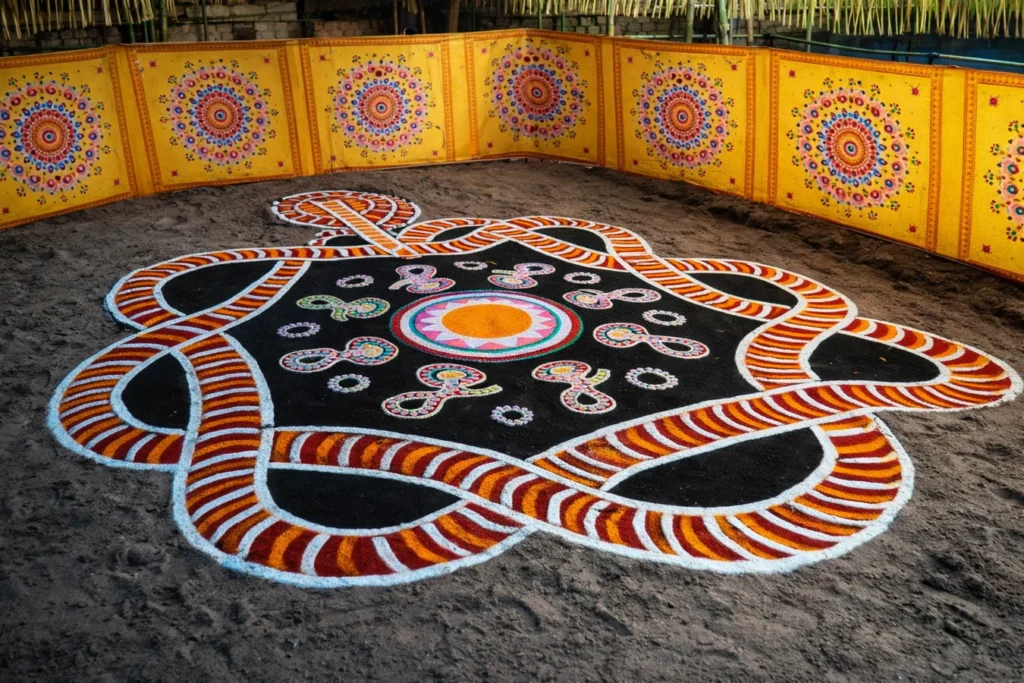
Sarpam Thullal is a ritual dance performed mainly in serpent groves and ancestral homes of Kerala to appease serpent deities. The ritual involves symbolic movements, rhythmic music, and sacred chants, and is believed to bring harmony, prosperity, and relief from ancestral afflictions.
Poothan and Thira
Poothan and Thira is a vibrant ritual performance associated with goddess Kali, commonly seen during temple festivals in central Kerala. It features two main characters with striking makeup, elaborate costumes, and energetic movements, accompanied by loud percussion that creates a dramatic and spiritual atmosphere.
Arjuna Nritham
Arjuna Nritham is a ritual dance performed primarily in South Kerala, traditionally by male artists, depicting episodes from the Mahabharata with a focus on Arjuna’s penance. It is characterised by circular movements, rhythmic footwork, and devotional storytelling.
Theeyattu
Theeyattu is a sacred ritual art form dedicated to goddess Kali, combining storytelling, dance, and fire symbolism. Performed in temples and sacred spaces, Theeyattu narrates the victory of the goddess over evil forces through ritual movements and traditional music.
Best Time to Witness Kerala Ritual Art Forms
The best time to witness Kerala ritual art forms is from October to May, when most temple festivals and traditional performances take place across the state. During these months, the weather is pleasant, and rituals are conducted according to the traditional calendar.
| Ritual Art Form | Best Time to Witness | Region / Venue |
| Theyyam | November – April | North Kerala (Kannur, Kasaragod) |
| Padayani | October – March | Central Kerala (Kottayam, Pathanamthitta) |
| Mudiyettu | December – May | Central Kerala (Thrissur, Palakkad) |
| Poothan and Thira | October – March | Central Kerala |
| Arjuna Nritham | December – May | Southern Kerala |
| Theeyattu | December – May | Central & South Kerala |
| Koodiyattam | Year-round (Temple festivals) | Central Kerala |
| Kalamezhuthu | Festival days / Temple rituals | Across Kerala |
| Tholppavakkoothu | Temple festival days | Palakkad region |
| Sarpam Thullal | October – March | across Kerala |
Conclusion
Kerala’s ritual art forms are a vivid testament to the state’s rich spiritual and cultural heritage, blending devotion, mythology, and artistic expression into living traditions. From the electrifying Theyyam of North Kerala to the intricate shadow puppetry of Tholppavakkoothu, each performance offers a unique insight into the beliefs, stories, and craftsmanship that have been preserved for generations. Witnessing these sacred rituals not only provides a deeper understanding of Kerala’s religious and cultural landscape but also allows travelers to experience the profound connection between faith, community, and art that defines this enchanting region. For those seeking an immersive cultural journey, Kerala’s ritual art forms remain an unforgettable and inspiring highlight.