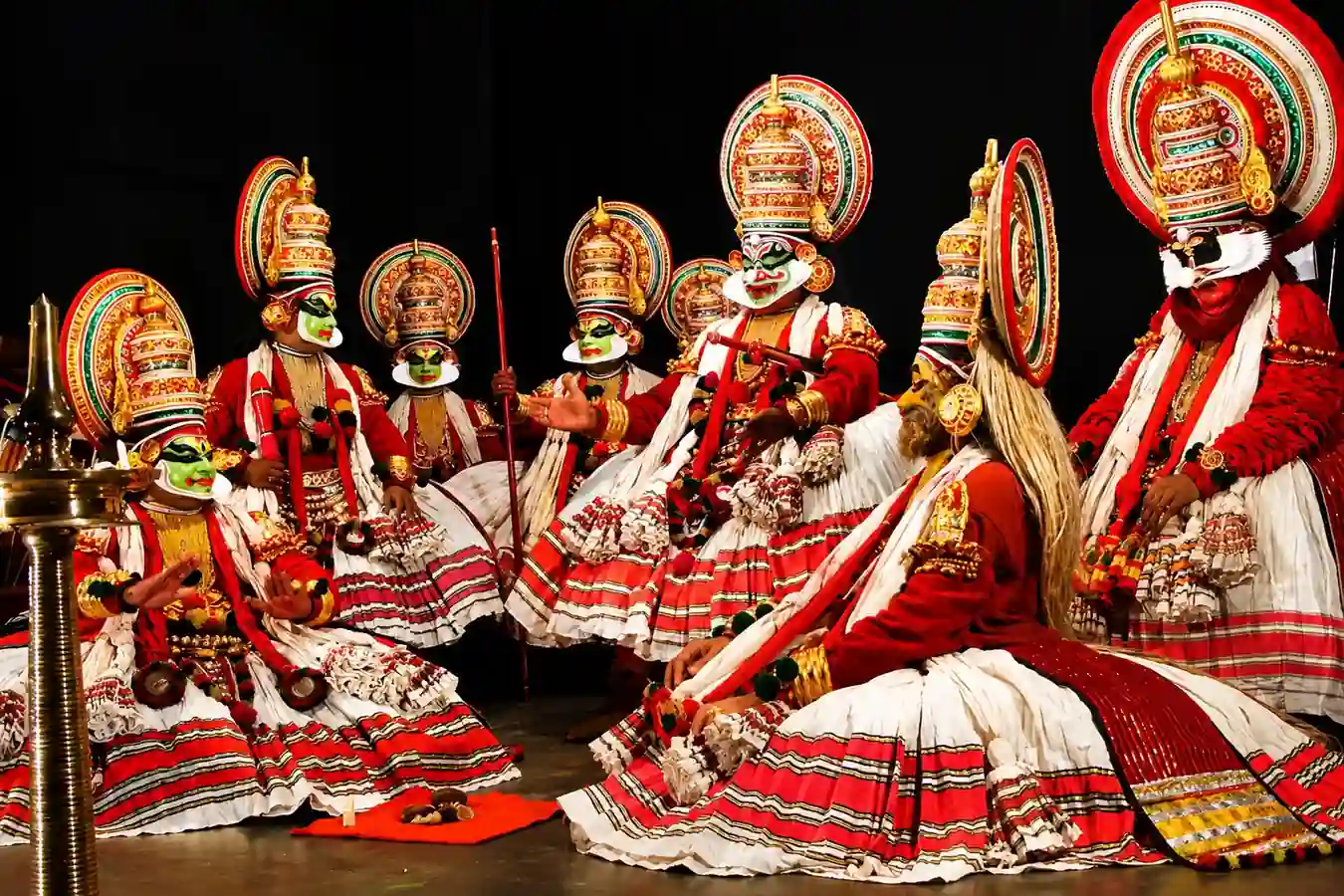
Art forms of Kerala are a living expression of the state’s rich cultural heritage, spiritual traditions, and centuries-old history. Renowned as God’s Own Country, Kerala is home to an extraordinary collection of classical, folk, ritual, martial, and temple art forms that have been preserved and celebrated for generations. These traditional performances blend dance, music, drama, storytelling, expressive facial gestures, and elaborate costumes, showcasing the artistic brilliance of the region.
From the vibrant performances of Kathakali and the graceful elegance of Mohiniyattam to the sacred rituals of Theyyam and the ancient martial art of Kalaripayattu, each art form reflects Kerala’s unique customs, beliefs, and way of life. Performed in temples, cultural centers, village festivals, and special events, these timeless traditions offer visitors an immersive experience into the heart of Kerala’s culture. Exploring the famous art forms of Kerala is not only a visual delight but also a journey through the state’s rich history, spirituality, and enduring artistic legacy.
Types of Art Forms in Kerala
Kerala’s artistic heritage can be broadly classified into several categories based on their purpose, origin, and style. Understanding these types of art forms in Kerala helps visitors appreciate the state’s diverse cultural traditions.
Classical Art Forms
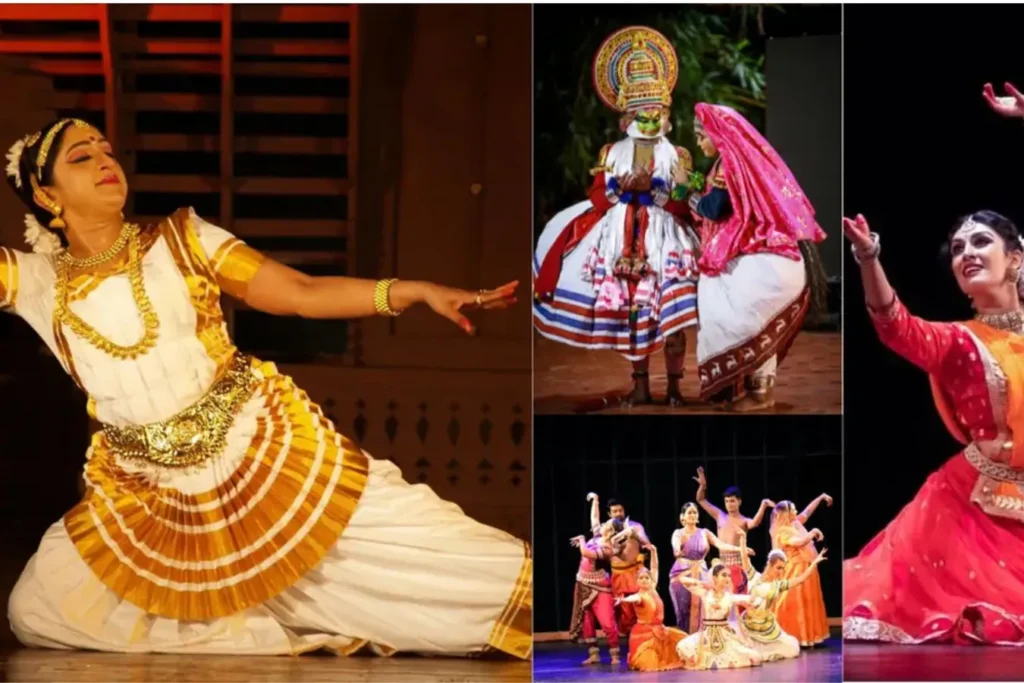
Classical art forms of Kerala are among the state’s most treasured cultural traditions, known for their refined techniques, expressive storytelling, and deep spiritual significance. Rooted in ancient texts and temple traditions, these performances have been preserved for centuries through rigorous training and disciplined practice. Classical artists spend years mastering intricate hand gestures (mudras), facial expressions (abhinaya), rhythmic footwork, and traditional music to bring mythological stories and historical legends to life.
These performances are more than just entertainment—they serve as a medium for preserving Kerala’s cultural heritage and passing on timeless values and traditions. Today, classical art forms continue to attract audiences from around the world and are regularly showcased in temples, cultural centers, festivals, and prestigious performing arts institutions.
Popular Classical Art Forms of Kerala:
- Kathakali
- Mohiniyattam
- Koodiyattam
- Chakyar Koothu
- Krishnanattam
Key Features:
- Based on ancient Indian performing arts traditions
- Rich storytelling inspired by mythology and epics
- Elaborate costumes, makeup, and ornaments
- Expressive facial expressions and symbolic hand gestures
- Accompanied by classical music and traditional percussion instruments
- Requires years of professional training and dedication
Folk Art Forms
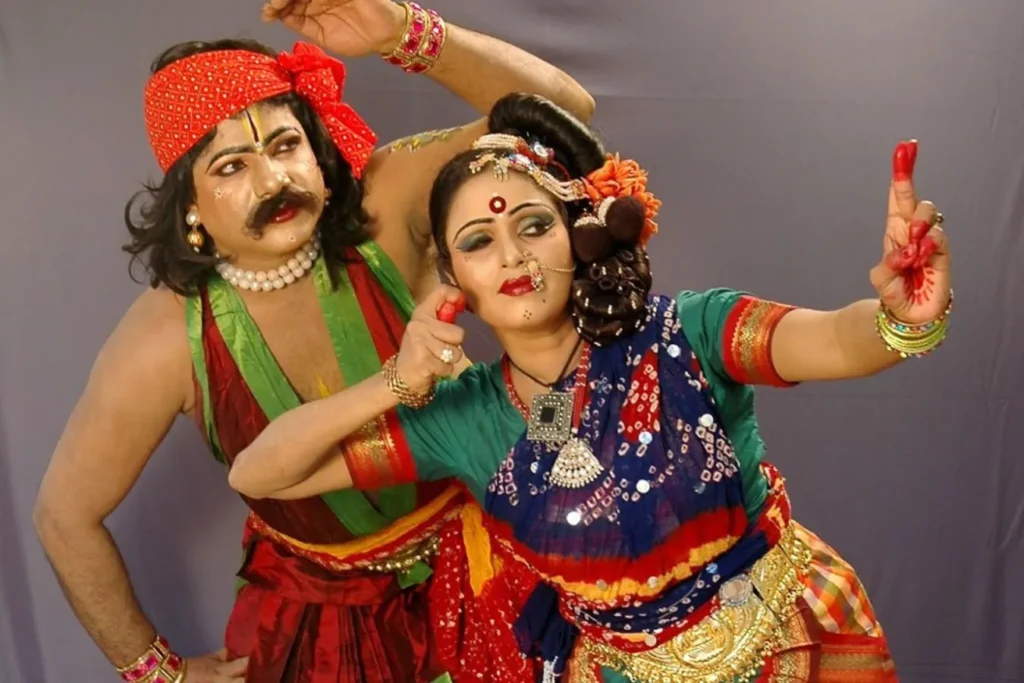
Folk art forms of Kerala represent the traditions, customs, and everyday life of the state’s local communities. Unlike classical performances, these art forms evolved from village culture and are closely associated with festivals, harvest celebrations, weddings, and social gatherings. They are lively, colorful, and often involve group participation, making them an important part of Kerala’s cultural identity.
Passed down through generations, Kerala’s folk art forms combine music, dance, storytelling, and rhythmic movements to celebrate local history, religious beliefs, and community life. These performances are enjoyed by people of all ages and continue to preserve the unique traditions of different regions across the state.
Popular Folk Art Forms of Kerala:
- Kolkali
- Oppana
- Margamkali
- Thiruvathirakali
- Poorakkali
- Duffmuttu
- Pulikali
Ritual Art Forms
Ritual art forms of Kerala are sacred performances deeply rooted in the state’s religious beliefs, temple traditions, and spiritual practices. Unlike other performing arts, these traditions are performed as acts of devotion and are considered an offering to deities during temple festivals and religious ceremonies. Many of these art forms have been practiced for centuries and continue to play a vital role in preserving Kerala’s spiritual and cultural heritage.
These performances are known for their elaborate costumes, striking facial makeup, rhythmic music, and ceremonial rituals. They often depict stories from Hindu mythology, local legends, and folklore, creating a powerful connection between performers, devotees, and the divine. Ritual art forms are especially popular in temples and villages, where they attract both worshippers and cultural enthusiasts.
Popular Ritual Art Forms of Kerala:
- Theyyam
- Padayani
- Mudiyettu
- Thottam Pattu
- Garudan Thookkam
Martial Art Forms
Martial art forms of Kerala are a remarkable blend of self-defense, physical discipline, and cultural tradition. These ancient practices have been passed down through generations and are deeply rooted in Kerala’s history and warrior heritage. Originally developed to train soldiers and protect kingdoms, Kerala’s martial arts have evolved into respected cultural performances that showcase strength, agility, balance, and precision.
The most famous martial art of Kerala is Kalaripayattu, widely regarded as one of the oldest martial arts in the world. Alongside it, performances such as Velakali combine combat techniques with dance and storytelling, especially during temple festivals. Today, these martial art forms are demonstrated at cultural events, training centers, and festivals, attracting visitors who wish to experience Kerala’s rich martial traditions.
Popular Martial Art Forms of Kerala:
- Kalaripayattu
- Velakali
- Parichamuttu Kali
Temple Art Forms
Temple art forms of Kerala are an integral part of the state’s religious and cultural heritage, performed within temple premises as offerings to deities during festivals and special ceremonies. These sacred performances combine dance, music, drama, and storytelling to convey mythological tales and spiritual teachings. Many temple art forms have been preserved for centuries and continue to play a significant role in Kerala’s traditional worship practices.
Artists undergo years of dedicated training to master these performances, which are known for their expressive acting, intricate costumes, traditional music, and symbolic rituals. Beyond their religious significance, temple art forms also serve as a means of preserving Kerala’s ancient performing arts and passing them on to future generations.
Popular Temple Art Forms of Kerala:
- Koodiyattam
- Chakyar Koothu
- Krishnanattam
- Nangyar Koothu
- Velakali
Painting Art Forms of Kerala
Painting art forms of Kerala are an important part of the state’s rich cultural heritage, reflecting its history, spirituality, and artistic traditions. From the vibrant Kerala Mural Paintings found in temples and palaces to the ritualistic Kalamezhuthu created with natural colored powders, these artworks showcase exceptional craftsmanship and cultural significance. Inspired by mythology, religion, and nature, Kerala’s traditional paintings continue to preserve the state’s artistic legacy while attracting art lovers and visitors from around the world.
Popular Painting Art Forms of Kerala:
- Kerala Mural Paintings
- Kalamezhuthu
- Temple Wall Paintings
- Christian Church Murals
- Contemporary Kerala Paintings
Festival Art Forms
Festival art forms of Kerala are vibrant cultural performances that bring the state’s festivals to life with music, dance, colorful costumes, and traditional celebrations. These art forms are performed during major festivals, temple celebrations, and community events, creating an atmosphere of joy and unity. They reflect Kerala’s rich customs, folklore, and religious traditions while entertaining audiences of all ages.
Many festival art forms have been practiced for centuries and are closely associated with celebrations such as Onam, temple festivals, and local cultural events. Featuring energetic performances, rhythmic percussion, elaborate costumes, and community participation, these traditions continue to attract visitors from around the world and highlight Kerala’s living cultural heritage.
Popular Festival Art Forms of Kerala:
- Pulikali
- Theyyam
- Thiruvathirakali
- Poorakkali
- Kummattikali
- Kaikottikali
Popular Art Forms of Kerala
Kathakali
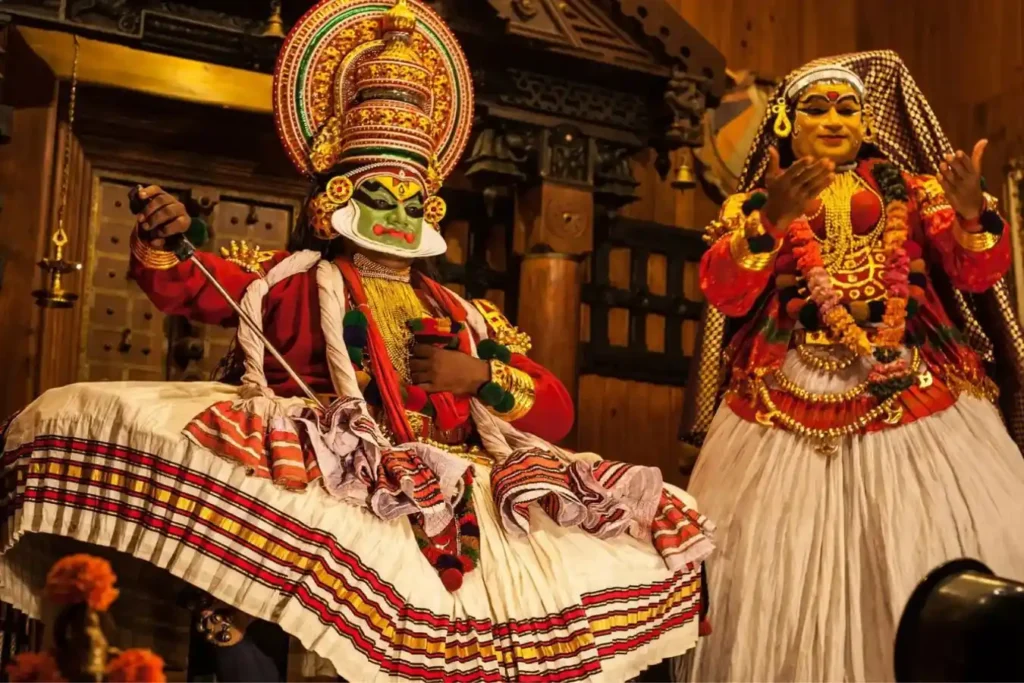
Kathakali is the most famous and iconic classical art form of Kerala, celebrated worldwide for its dramatic storytelling, elaborate costumes, and expressive performances. Originating in the 17th century, this traditional dance-drama combines dance, music, acting, and intricate facial expressions to narrate stories from the Ramayana, Mahabharata, and other Hindu epics. Every movement, hand gesture (mudra), and eye expression carries symbolic meaning, allowing performers to convey powerful emotions without speaking.
One of Kathakali’s most distinctive features is its elaborate makeup and colorful costumes. Characters are identified by specific makeup styles and facial colors, each representing different personalities such as heroes, villains, sages, or divine beings. Accompanied by traditional percussion instruments like the chenda, maddalam, and chengila, Kathakali performances are both visually stunning and culturally enriching.
Today, Kathakali is performed at temples, cultural centers, festivals, and theatres across Kerala, making it one of the state’s most popular attractions for visitors seeking an authentic cultural experience. To plan your cultural journey, explore our guide to the Best Places to Watch Kathakali in Kerala, where you can discover the top venues and festivals offering unforgettable live performances.
Best Places to Watch Kathakali in Kerala
If you want to experience an authentic Kathakali performance, these are some of the best places to visit in Kerala:
- Fort Kochi – Home to several cultural centers offering daily Kathakali performances and makeup demonstrations.
- Kerala Kalamandalam, Thrissur – Kerala’s premier institution for classical performing arts, where visitors can watch professional performances and student recitals.
- Kerala Kathakali Centre, Fort Kochi – One of the most popular venues for tourists to enjoy traditional Kathakali shows.
- Margi Theatre, Thiruvananthapuram – Renowned for preserving Kerala’s classical art forms through regular performances.
- Temple Festivals Across Kerala – Special Kathakali performances are organized during annual temple festivals, particularly between November and April.
- Best Time to Watch: October to March, when the weather is pleasant and Kerala hosts numerous cultural festivals and traditional performances.
Mohiniyattam
Mohiniyattam is one of the most graceful and elegant classical dance forms of Kerala. The name “Mohiniyattam” means “the dance of the enchantress (Mohini),” referring to the female avatar of Lord Vishnu in Hindu mythology. Known for its gentle movements, expressive facial expressions, and rhythmic footwork, this dance form beautifully portrays themes of love, devotion, and compassion.
Traditionally performed by women, Mohiniyattam is characterized by soft, flowing movements and subtle expressions that create a captivating performance. Dancers wear the iconic white and gold Kerala saree (Kasavu), adorned with traditional jewelry and flowers in their hair, reflecting the simplicity and elegance of Kerala’s cultural heritage. Accompanied by classical Carnatic music and traditional instruments such as the mridangam, edakka, and veena, Mohiniyattam continues to enchant audiences in India and around the world.
Today, Mohiniyattam is performed at cultural festivals, temples, dance academies, and prestigious performance venues, making it an essential experience for anyone exploring Kerala’s artistic traditions.
Key Features of Mohiniyattam:
- One of the eight classical dance forms of India
- Originated and flourished in Kerala
- Traditionally performed by women
- Known for graceful, slow, and fluid movements
- Expresses themes of devotion, love, and mythology
- Features elegant white and gold (Kasavu) costumes
- Accompanied by Carnatic music and traditional percussion instruments
Koodiyattam
Koodiyattam is one of the oldest surviving Sanskrit theatre traditions in the world and one of Kerala’s most prestigious classical performing arts. With a history spanning over 2,000 years, this ancient art form is traditionally performed inside temple theatres known as Koothambalams. In recognition of its outstanding cultural value, UNESCO has inscribed Koodiyattam on the Representative List of the Intangible Cultural Heritage of Humanity.
Performed by highly trained artists, Koodiyattam combines expressive acting, symbolic hand gestures (mudras), detailed eye movements, classical music, and traditional percussion to narrate stories from Hindu epics and Sanskrit literature. The performances are slow, elaborate, and deeply expressive, allowing audiences to appreciate every emotion and dramatic detail.
Today, Koodiyattam remains an important part of Kerala’s cultural heritage and is performed at temples, cultural festivals, and renowned performing arts institutions.
Chakyar Koothu
Chakyar Koothu is a traditional temple art form of Kerala that combines storytelling, drama, satire, and humor into a captivating solo performance. Performed primarily by members of the Chakyar community inside temple theatres (Koothambalams), this centuries-old art form is based on stories from the Ramayana, Mahabharata, and the Puranas. What makes Chakyar Koothu unique is the performer’s ability to blend mythology with witty social commentary, making each performance both entertaining and thought-provoking.
The artist uses expressive facial expressions, hand gestures, rhythmic narration, and occasional improvisation to engage the audience. Accompanied by the traditional Mizhavu drum, Chakyar Koothu preserves Kerala’s rich literary and theatrical heritage while keeping ancient storytelling traditions alive.
Best Places to Watch Chakyar Koothu in Kerala
- Kerala Kalamandalam, Thrissur
- Vadakkunnathan Temple, Thrissur
- Guruvayur Temple
- Margi Theatre, Thiruvananthapuram
- Temple Koothambalams Across Kerala
- Best Time to Watch: October to March, when Kerala hosts numerous temple festivals and cultural events featuring authentic Chakyar Koothu performances.
Theyyam
Theyyam is one of the oldest and most spectacular ritual art forms of Kerala, deeply rooted in the cultural and spiritual traditions of North Kerala. The word “Theyyam” is derived from the Malayalam word Daivam, meaning “God,” as the performers are believed to embody divine spirits during the ritual. This sacred performance combines dance, music, elaborate costumes, vibrant face painting, and ceremonial rituals to honor local deities, ancestral heroes, and guardian spirits.
Theyyam is primarily performed in temples, sacred groves (Kavu), and village shrines across the districts of Kannur and Kasaragod. Artists spend hours preparing intricate makeup and wearing towering headgear and colorful costumes before performing energetic dances accompanied by the rhythmic beats of traditional percussion instruments. For devotees, Theyyam is not merely a performance but a deeply spiritual experience where the performer is revered as a living deity.
Recognized for its dramatic visuals and rich cultural significance, Theyyam attracts thousands of visitors each year, offering an unforgettable glimpse into Kerala’s living traditions and folklore.
Best Places to Watch Theyyam in Kerala
If you’re searching for the famous Theyyam temple in Kannur, you’ll find some of Kerala’s most authentic ritual performances in the district’s ancient temples and sacred groves. Kannur is widely regarded as the cultural heart of Theyyam, where hundreds of annual performances are held during the festival season.
- Parassinikkadavu Muthappan Temple, Kannur – One of the most famous Theyyam temples in Kannur, renowned for its daily Muthappan rituals and vibrant cultural traditions.
- Sree Rajarajeswara Temple, Taliparamba – A historic temple where traditional Theyyam performances are held during annual festivals.
- Kottiyoor Mahadeva Temple, Kannur – Famous for its sacred temple festivals and seasonal ritual performances.
- Madayi Kavu, Kannur – A well-known temple dedicated to Goddess Kali, celebrated for its traditional Theyyam ceremonies.
- Cherukunnu Annapoorneswari Temple, Kannur – Hosts colorful Theyyam performances during major temple festivals.
- Various Sacred Groves (Kavu) Across Kannur – Many village shrines and kavus conduct authentic Theyyam rituals throughout the season.
- Best Time to Watch: October to May, when the Theyyam festival season is in full swing across Kannur and North Kerala, offering visitors the best opportunity to experience this extraordinary ritual art form. During this period, the famous Theyyam temples in Kannur attract thousands of devotees, photographers, and cultural travelers from around the world.
Ottamthullal
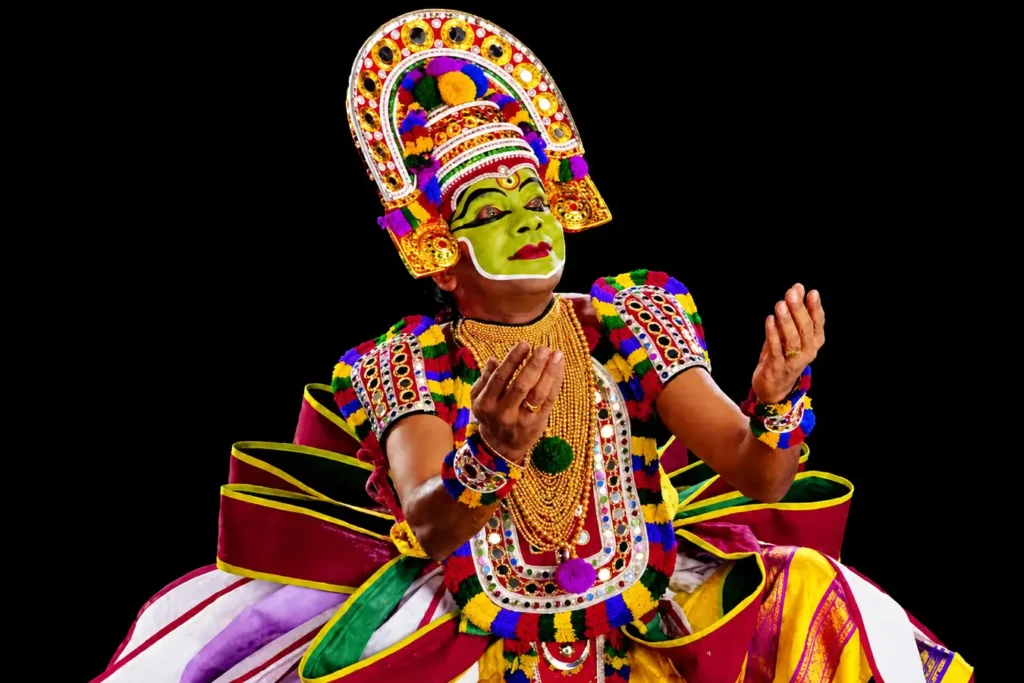
Ottamthullal is a popular folk performing art of Kerala that combines dance, storytelling, poetry, and satire. Created in the 18th century by the renowned Malayalam poet Kunchan Nambiar, this lively art form was introduced as a simpler and more entertaining alternative to traditional temple performances. Ottamthullal presents stories from the Ramayana, Mahabharata, and the Puranas, often incorporating humor and social criticism to engage audiences.
Performed by a single artist, Ottamthullal is known for its energetic dance movements, expressive gestures, colorful costumes, and rhythmic narration. Accompanied by traditional instruments such as the mridangam and idakka, the performance offers an enjoyable blend of entertainment and cultural storytelling.
Key Features of Ottamthullal:
- Created by Kunchan Nambiar in the 18th century
- Solo dance and storytelling performance
- Based on Hindu epics and mythology
- Combines humor, satire, poetry, and dance
- Features vibrant costumes and expressive facial expressions
- Accompanied by traditional percussion instruments
- Best Places to Watch Ottamthullal in Kerala
- Kerala Kalamandalam, Thrissur
- Margi Theatre, Thiruvananthapuram
- Temple festivals across Kerala
- Cultural festivals and heritage events
- Kerala Folklore Museum, Kochi (special cultural programs)
- Best Time to Watch: October to March, when Kerala hosts numerous cultural festivals and traditional performances.
Margamkali
Margamkali is a traditional folk dance of Kerala’s Syrian Christian community, celebrating the life and teachings of St. Thomas the Apostle, who is believed to have introduced Christianity to Kerala. The word “Margam” means “the path,” symbolizing the path of faith. This graceful group dance is performed around a traditional oil lamp, with dancers singing devotional songs while moving in rhythmic circular patterns.
Margamkali is commonly performed during church festivals, weddings, cultural events, and community celebrations. Its simple choreography, meaningful lyrics, and devotional atmosphere make it an important symbol of Kerala’s multicultural heritage.
Kalaripayattu
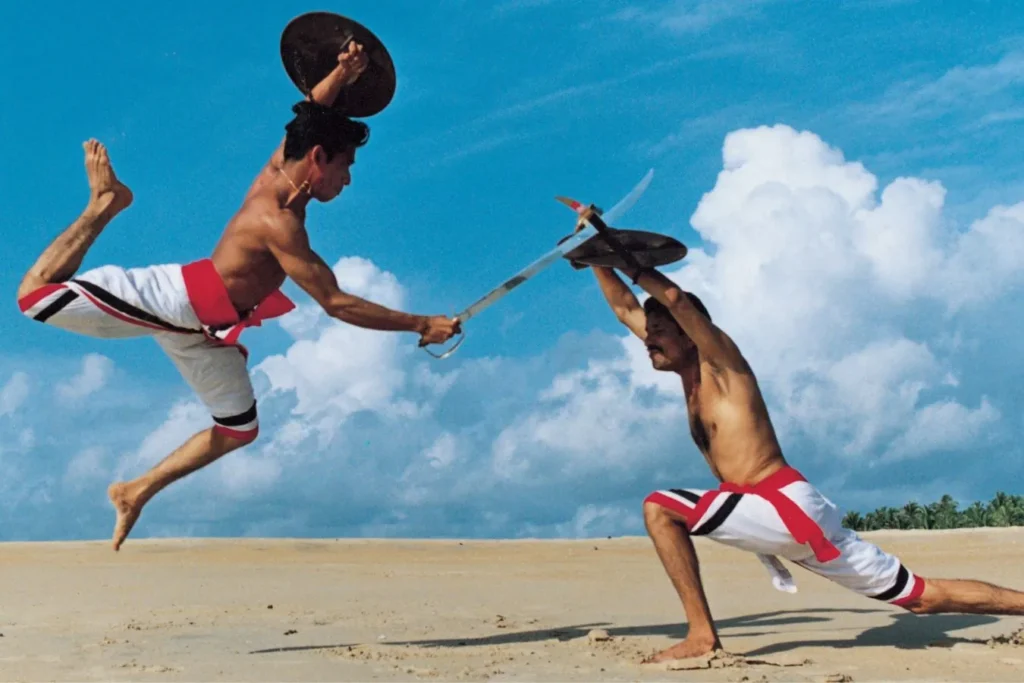
Kalaripayattu is one of the oldest martial arts in the world and a proud symbol of Kerala’s rich cultural heritage. Originating over 3,000 years ago, this ancient martial art combines self-defense techniques, weapon training, acrobatics, flexibility, meditation, and traditional healing practices. Once used to train warriors, Kalaripayattu is now performed as both a martial discipline and a captivating cultural demonstration.
Training takes place in a traditional Kalari (martial arts school), where students learn combat techniques, sword fighting, spear combat, body control, and agility through years of disciplined practice. Today, Kalaripayattu performances are a major attraction for visitors, showcasing remarkable strength, speed, and precision.
Padayani
Padayani is one of Kerala’s most vibrant and ancient ritual art forms, performed primarily in the temples of Central Kerala. Deeply rooted in Hindu mythology and temple traditions, Padayani is dedicated to Goddess Bhadrakali and is performed as part of annual temple festivals. The name “Padayani” means “rows of warriors,” symbolizing the victory of good over evil. This sacred performance combines ritual dance, devotional music, storytelling, and striking visual elements to create a powerful spiritual experience.
One of the most distinctive features of Padayani is the use of Kolams—large, colorful masks crafted from areca palm leaves and painted with natural colors. Performers wear these elaborate masks while dancing to the rhythmic beats of traditional percussion instruments such as the thappu and chenda. The performances depict stories from Hindu mythology, particularly the triumph of Goddess Bhadrakali over the demon Darika.
Padayani is not only a religious ritual but also an important cultural tradition that preserves Kerala’s artistic heritage and attracts devotees, photographers, and cultural enthusiasts from around the world.
Conclusion
The art forms of Kerala beautifully preserve the state’s rich cultural heritage, spiritual traditions, and centuries-old artistic legacy. From the captivating storytelling of Kathakali and the graceful movements of Mohiniyattam to the sacred rituals of Theyyam, the ancient theatre of Koodiyattam, and the powerful techniques of Kalaripayattu, each art form offers a unique glimpse into Kerala’s vibrant history and cultural identity. These living traditions continue to inspire visitors from around the world, making Kerala one of India’s top cultural tourism destinations.
If you’re planning to experience these extraordinary performances firsthand, TravelBug India, a trusted South India tour operator, offers carefully crafted South India Tour Packages that let you explore the region’s authentic art forms, heritage sites, temple festivals, and scenic landscapes. Travel with TravelBug India to discover the true spirit of Kerala and create unforgettable memories through immersive cultural experiences.
Frequently Asked Questions
1. What are the famous art forms of Kerala?
Some of the most famous art forms of Kerala include Kathakali, Mohiniyattam, Theyyam, Koodiyattam, Chakyar Koothu, Ottamthullal, Margamkali, Kalaripayattu, and Padayani. These traditional performances showcase Kerala’s rich cultural heritage and artistic excellence.
2. What are the different types of art forms in Kerala?
The main types of art forms in Kerala are classical art forms, folk art forms, ritual art forms, martial art forms, temple art forms, and festival art forms. Each category represents a unique aspect of Kerala’s culture and traditions.
3. Which is the most famous classical art form of Kerala?
Kathakali is the most famous classical art form of Kerala. It is renowned for its elaborate costumes, expressive facial makeup, dramatic storytelling, and performances based on Hindu epics like the Ramayana and Mahabharata.
4. Where can tourists watch traditional art forms in Kerala?
Tourists can enjoy traditional performances at Kerala Kalamandalam in Thrissur, Kerala Kathakali Centre in Fort Kochi, Margi Theatre in Thiruvananthapuram, and during temple festivals across Kerala. North Kerala, especially Kannur, is the best place to experience authentic Theyyam.
5. What is the best time to experience Kerala’s traditional art forms?
The best time to experience Kerala’s art forms is from October to March, when the weather is pleasant and many cultural festivals and temple celebrations are held. For Theyyam performances, the ideal season is October to May.
6. Why are Kerala’s art forms unique?
Kerala’s art forms are unique because they combine dance, music, drama, storytelling, spirituality, and elaborate costumes. Many of these traditions have been preserved for centuries and continue to be performed in temples, cultural centers, and festivals.
7. Which art form of Kerala is recognized by UNESCO?
Koodiyattam is recognized by UNESCO as one of the world’s oldest surviving Sanskrit theatre traditions and is listed as an Intangible Cultural Heritage of Humanity.
8. What is the difference between Kathakali and Mohiniyattam?
Kathakali is a classical dance-drama known for powerful expressions, elaborate costumes, and mythological storytelling, while Mohiniyattam is a graceful classical dance traditionally performed by women, emphasizing gentle movements and themes of devotion.
9. Which is the most famous Theyyam temple in Kannur?
The Parassinikkadavu Muthappan Temple is one of the most famous Theyyam temples in Kannur, attracting thousands of devotees and visitors during the annual Theyyam season.